Objects of Desire
Thatch, terracotta and a stone tiger: how Bali builds
From four bungalows in Sanur to 1.8 million hand-pressed bricks: Bali’s standout buildings.
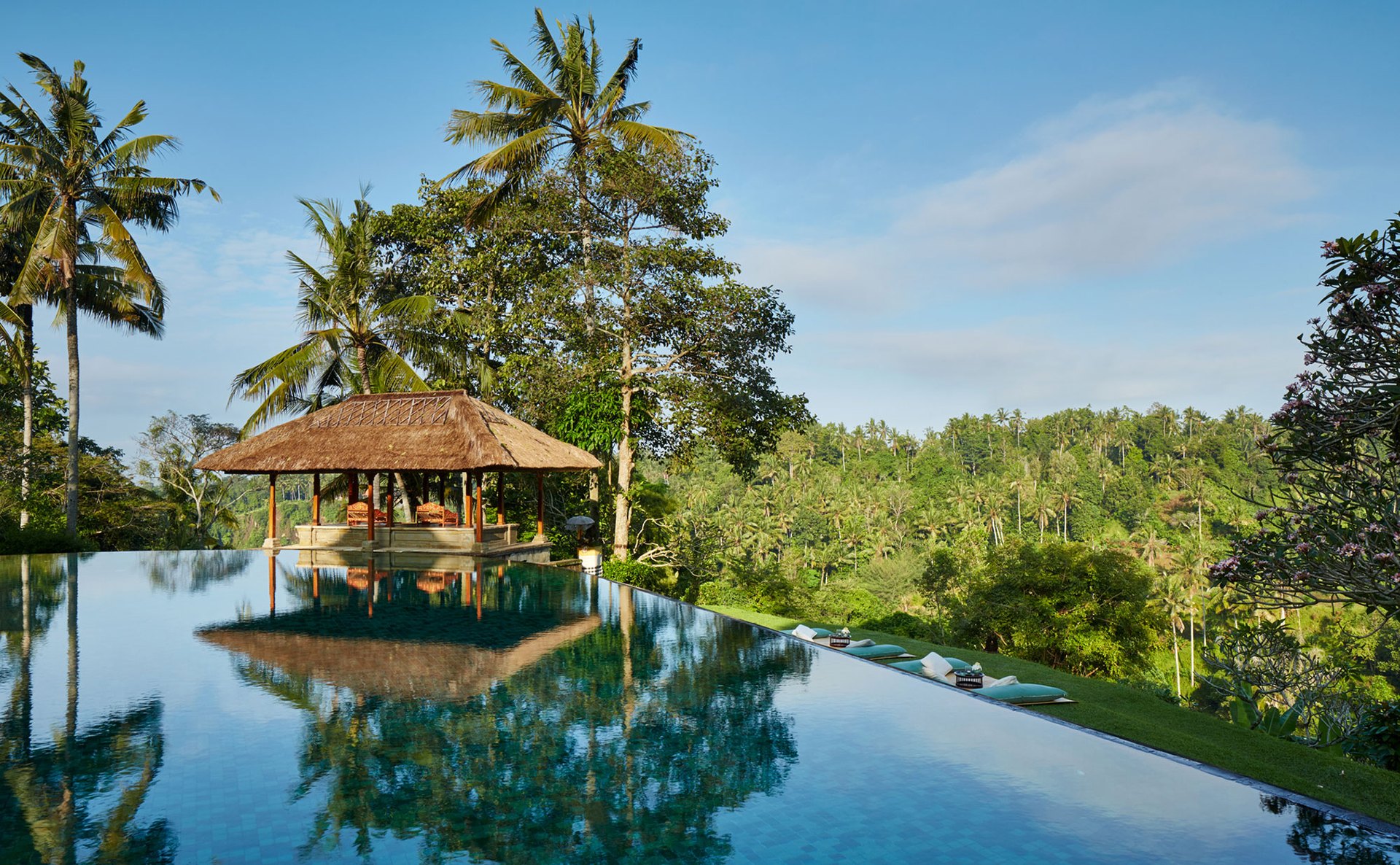
Photo Credit
Image courtesy of © AmandariBali has spent more than sixty years teaching hotel architects to build like villagers. From four bungalows on a Sanur beach to a stone tiger above the Ayung gorge and a hotel made of hand-pressed bricks in Seminyak, what makes a building here feel Balinese? The answers come from the places’ own pages, checked in November 2026. No prices, only buildings.
Four bungalows and a business plan
Tandjung Sari, on the beach at Sanur, began as a place for its owner, Wija Wawo-Runtu, and his family to stay on buying trips from Jakarta for their antique business. By 1962 there were four small bungalows for the friends who followed. It did not mean to become, in its own words, the seminal boutique hotel of tropical Asia. The Wawo-Runtu family still runs it, and even its logo grew from a photograph of coral taken in front of its own beach.
The formula was simple: local materials and Balinese building techniques, rooms furnished with Balinese antiques, wide gardens on a prime stretch of beach. Wija understood, the hotel says, that visitors wanted to feel the air of Bali on their skin and to live in what they imagined was a Balinese way, only more comfortably. Half a century of resort design is a footnote to that sentence.
A village above the gorge
Amandari, at Kedewatan outside Ubud, was designed after a traditional Balinese village on the lip of the Ayung River Gorge, and is presided over by a sacred stone tiger.
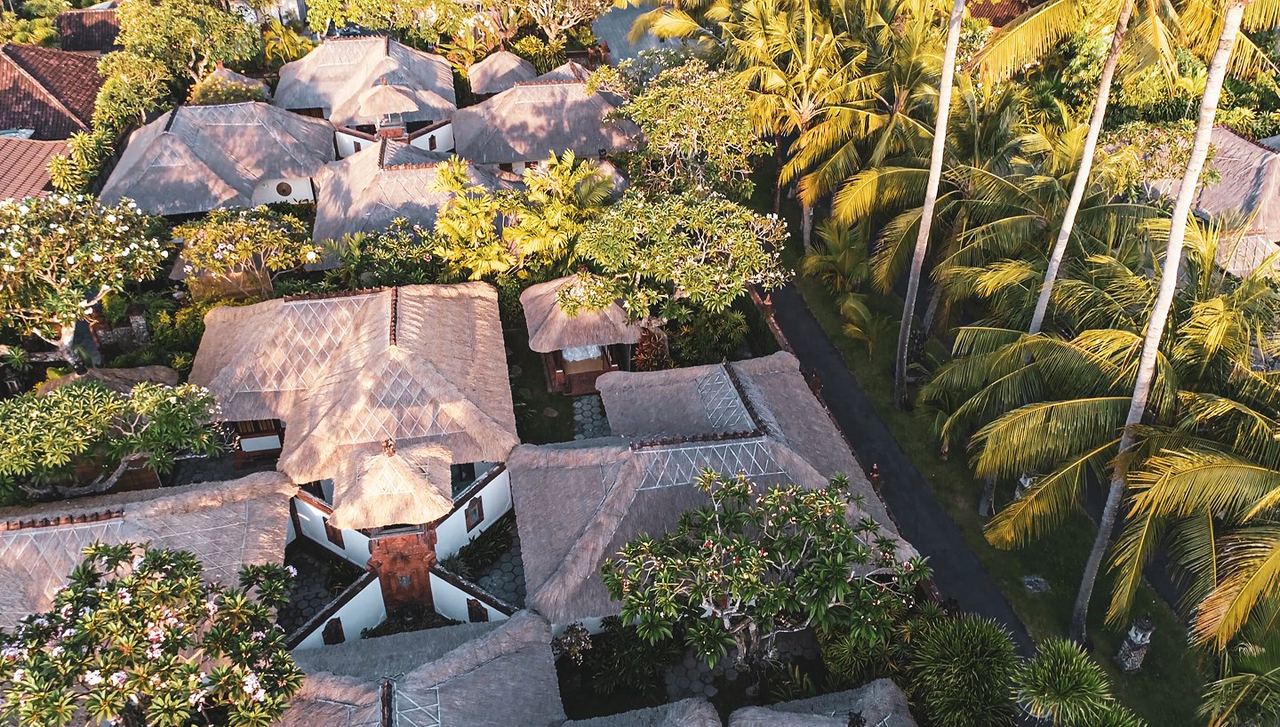
Photo Credit
Image courtesy of © Tandjung SariFree-standing pavilions are reached by winding paths; the roofs are alang-alang thatch, the interiors coconut, teak and bamboo, and the curving swimming pool mimics the rice paddies below. The pool is a better farmer than most of us.
On the east coast, Amankila sets its suites on stilts in the treetops above the Lombok Strait, joined by frangipani-lined walkways, with Mount Agung behind and a three-tier infinity pool at its heart. Aman says the resort is closed for seasonal maintenance and reopens on 20 January 2027.
Its eleven Aman Residences, the villas at Amankila, take the same language further: broad terraces, infinity pools and a series of pavilions linked by private walkways, in contemporary thatch and smooth crafted stone, with cues from local artisans. At Nusa Dua, Aman’s villas are classically styled with what it calls graceful Balinese touches. The prices are a matter for Aman; the buildings are a matter for anyone with eyes.
Half a century of resort design is a footnote to that sentence.
Bricks by the million
In Seminyak, Desa Potato Head calls itself a zero-waste creative village, fifteen years in the making. Its AM House, designed by Andra Matin, is built from 1.8 million hand-pressed terracotta bricks made by artisans in the village of Darmasaba using traditional Balinese techniques.
The walls change with the light, from soft morning tones to a warm amber glow by evening. Inside, open-plan suites wrap around lush internal gardens, so the building reads less as a hotel block than as a very large, very patient piece of pottery.
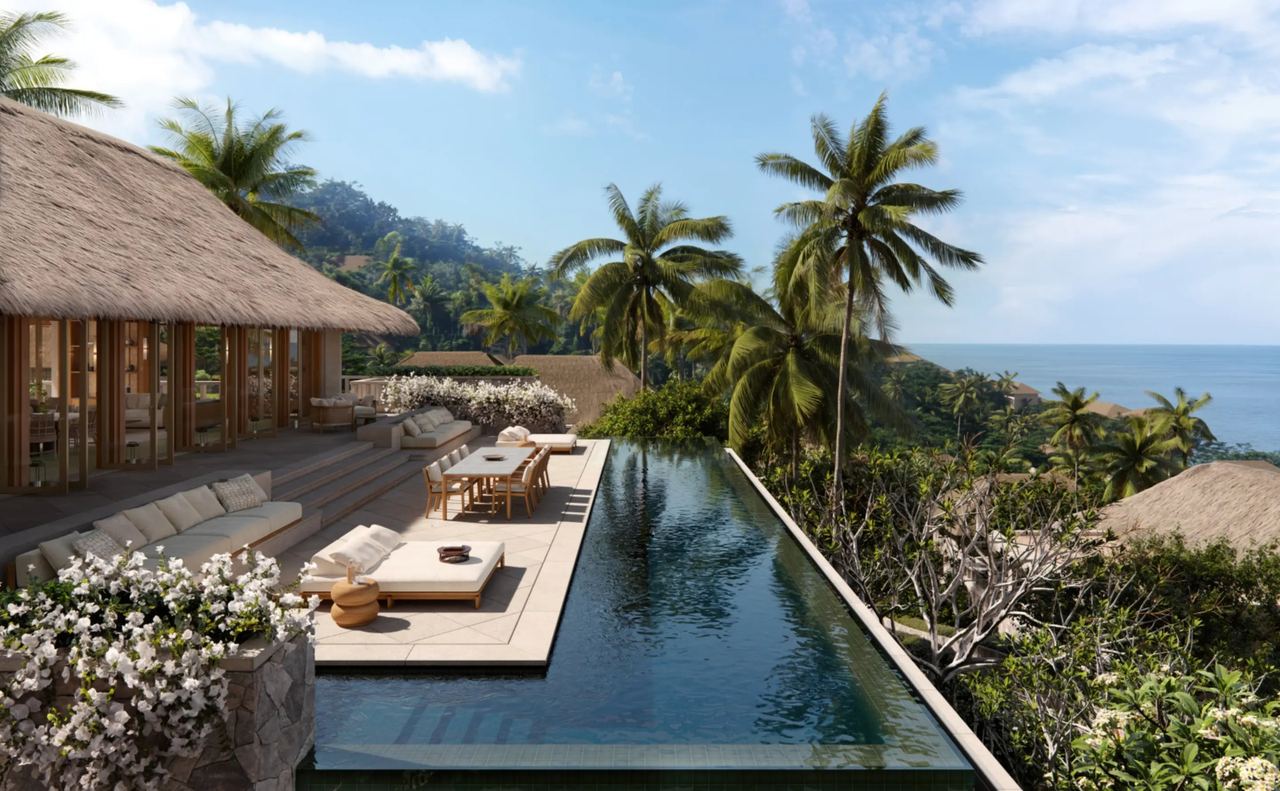
Photo Credit
Image courtesy of © AmanAlongside it, OMA House, designed by OMA, sets out to rethink the line between private rooms and shared cultural life, with suites facing either the Indian Ocean or the mountains of north-west Bali.
The beach club, also by Andra Matin, is handcrafted from thousands of reclaimed timber shutters: a façade made, in effect, of other buildings’ windows. Within the OMA building, Potato Head’s Good Times General Store is built from locally sourced natural materials and, the Desa says, rooted in Balinese craftsmanship.
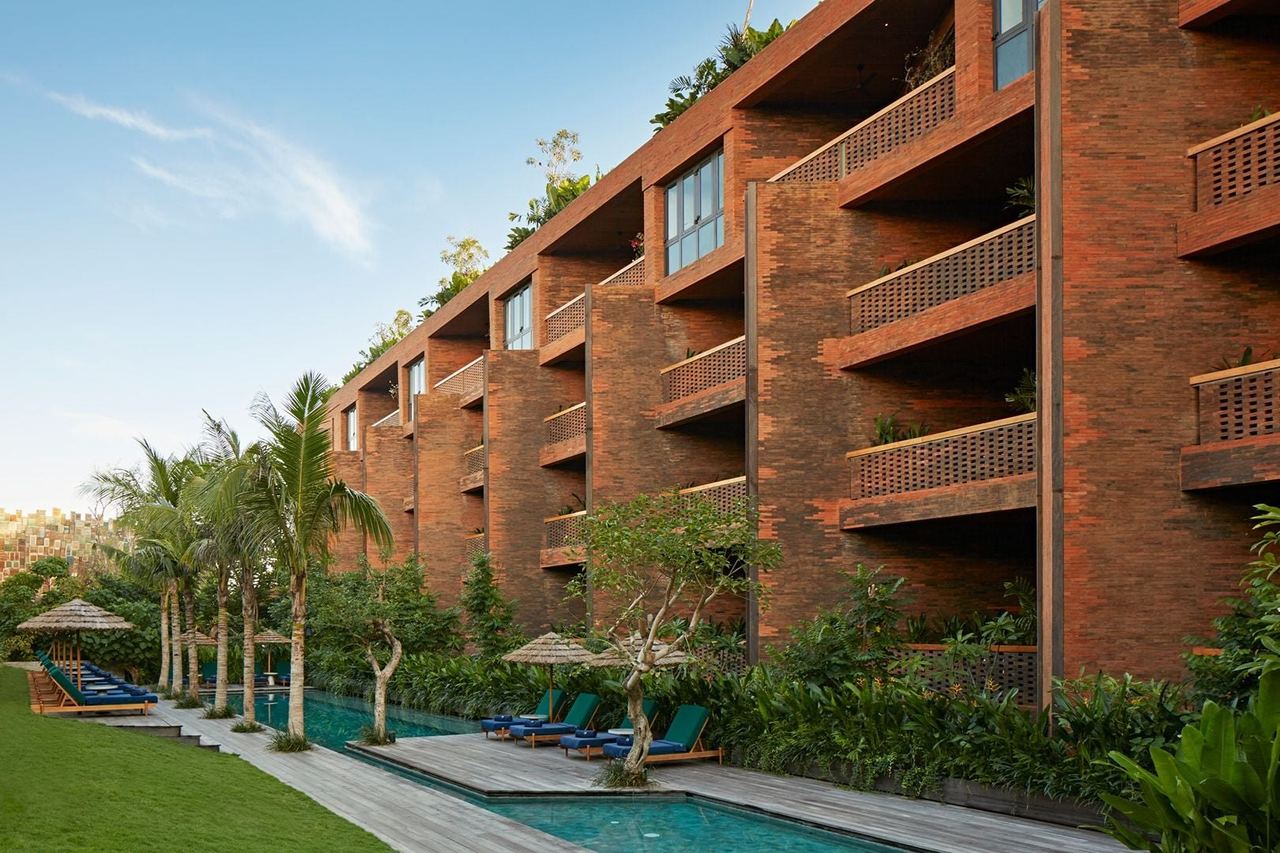
Photo Credit
Image courtesy of © Potato HeadUp the coast at Canggu, Hotel Tugu Bali takes the opposite route to minimalism. Each room, the hotel says, is individually created by its owner and filled with an eclectic collection of antiques from across Asia. It is less a hotel than a cabinet of curiosities with a surf break out front.
Our advice: architecture in Bali is best seen by appointment with lunch. Book a table rather than a room, arrive in daylight, and look up at the roofs, which do more of the talking than the brochures. Respect the private villas as homes; Aman keeps its residences for owners.
Why it's on our list
- Four bungalows in Sanur
- A village above the gorge
- Bricks by the million
- A cabinet of curiosities
Location
The map comes from Google Maps, which sets its own cookies once it loads.
More in depth
 Objects of DesireSundown, with a footnote: Bali and the Mai-TaiThe IBA’s Mai-Tai, a cliff-foot bar with 880 seats, upcycled citrus and a 1930s speakeasy.
 Objects of DesireLess parked than crouched: the electric Jaguar and the new supercarsJaguar’s Type 00 and Type 01, Ferrari’s first electric car and the record-breakers around them.
 Objects of DesireA choir with no instruments: how Bali soundsThe gamelan’s bronze, the Kecak’s chanting circle, and where to hear both on Bali.