The back story
From the volcano to the espresso lane: Bali’s coffee culture, the back story
Kintamani arabica, Seminyak roasters and Ubud’s plant-based cafés: how Bali learned to brew.
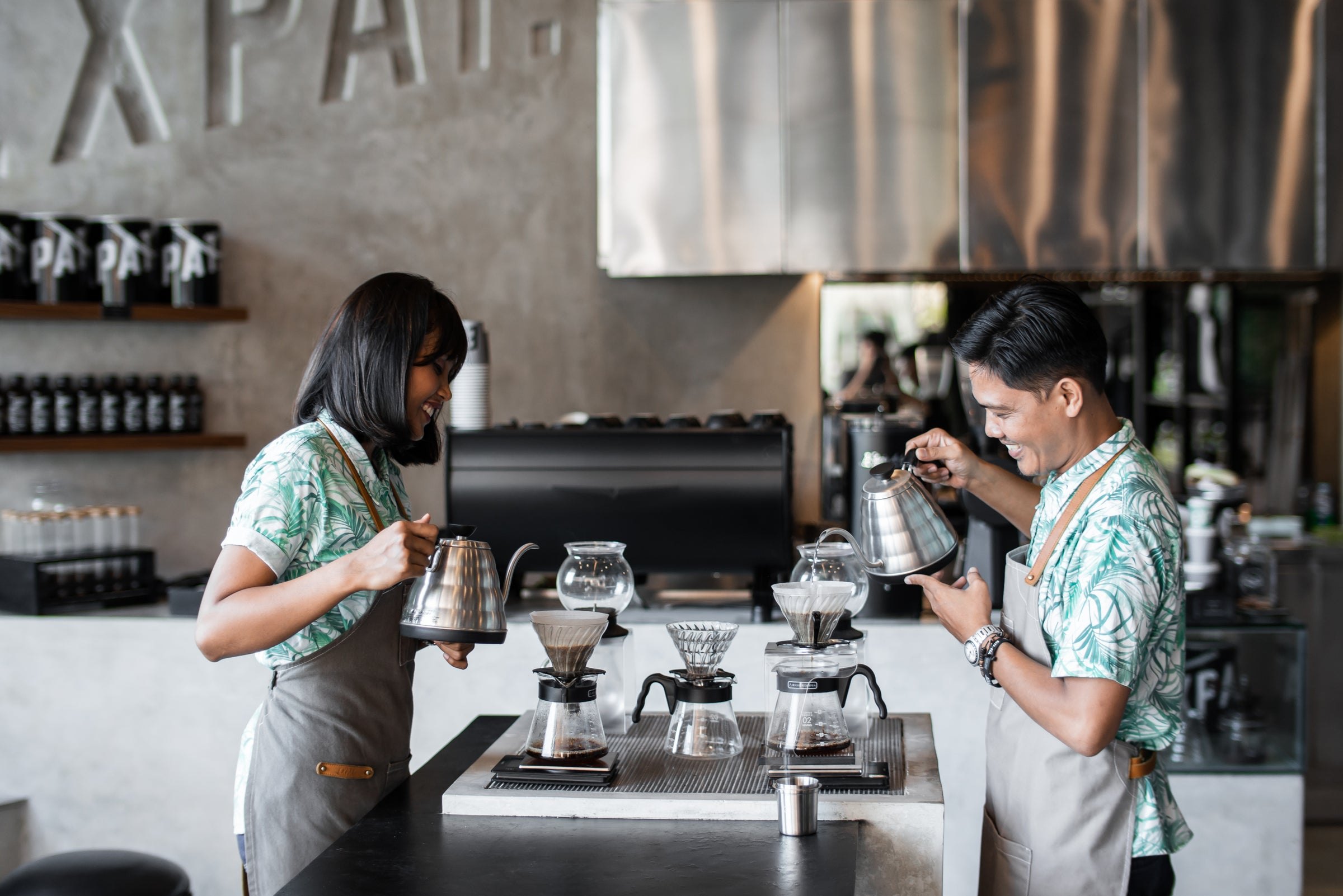
Photo Credit
Image courtesy of © Expat. RoastersCoffee reached Indonesia through Batavia in 1696; on Bali it found the cool slopes of Kintamani, where arabica grows among fruit trees and brings a citrus note into the cup. Today the island’s roasters, brunch cafés and raw-food kitchens draw on that highland crop. Here is how a rice-and-temple island became one of the most interesting places in Asia to order a flat white.
Beans from the crater’s edge
Coffee came to Indonesia under Dutch rule, through Batavia, now Jakarta, in 1696; the first batch was exported in 1711. Bali’s own contribution grows in the cool highlands of Kintamani, around Mount Batur, and in 2008 Kintamani arabica received a geographical-indication certificate from the national Ministry of Law and Human Rights, putting the name under protection.
What makes it different is the company it keeps. Farmers here belong to subak abian, the island’s dry-land farming groups, and plant coffee alongside fruit and vegetables. Ground, the beans give a sweet aroma with a hint of spice; brewed, a fresh, citrus-like, fruity cup. The fruit in the cup is not a tasting note invented by a marketing department; it grows in the same garden.
Some of these gardens are now certified organic: the Subak Abian Wanasari Kenjung, in Catur village, earned its certificate in 2019, and auditors still walk its farms checking pruning, compost and the separation of every batch. In November 2019 the region threw a Kintamani Coffee Festival, with tastings spread from the Batur Geopark Museum to the farming villages of Catur, Ulian, Pengotan and Petung.
The roasters arrive
The island’s other coffee is Indonesia’s most notorious: kopi luwak, made from beans collected from the droppings of the palm civet. Bali’s new generation of roasters built their reputations on something altogether less digestive. Revolver Espresso began as a tiny café down a Seminyak lane in 2012 and now roasts its own arabica for several venues across the island.
Expat. Roasters, in Seminyak, calls itself a speciality producer after an unpretentious brew; it buys from Balinese farmers and blends them with beans from other regions, and trains baristas. Its own Kintamani natural filter roast is the local crop wearing its best clothes. In Ubud, Seniman Coffee calls itself a specialty coffee and design studio, and has published a flavour wheel and a book on Bali coffee to prove it.
Brunch, Canggu style
Then came the long breakfast. Gypsy and Justin opened Betelnut in 2011, which they describe as the first café in Canggu, and followed it in 2016 with The Shady Shack, a sustainable café for vegetarian and vegan wholefoods beside the rice fields. Sisterfields, on Jalan Kayu Cendana in Seminyak, says plainly that it represents the café culture of Australia, and the flat white came with it.
The fruit in the cup is not a tasting note invented by a marketing department; it grows in the same garden.
KYND Community has been ‘spreading kyndness’ from Seminyak since 2017, and added cafés in Canggu in 2023 and Uluwatu in 2025, along with cookbooks and an online cooking school. The menus are vegetarian and vegan, and the bowls arrive styled for the camera before anyone has picked up a spoon.
Ubud and the plant-based table
Inland, Ubud took the idea further. At Alchemy, in Penestanan, dishes marked raw are never heated above 43°C. Clear Café, on Jalan Hanoman, makes its own nut milks and dressings and stays open from 8am–11pm; Sayuri Healing Food pairs its café with a plant-based academy that trains chefs in what it calls living cuisine. Zest Ubud and Watercress complete a town where ordering a plain white coffee can feel faintly rebellious.
At Jimbaran, the ritual turns formal: Raffles Bali serves a traditional afternoon tea in The Writers Bar, against wide views of the Indian Ocean. It is a reminder that the island’s café culture is less a single tradition than a series of imports, each one adopted, adjusted and served back with a view.
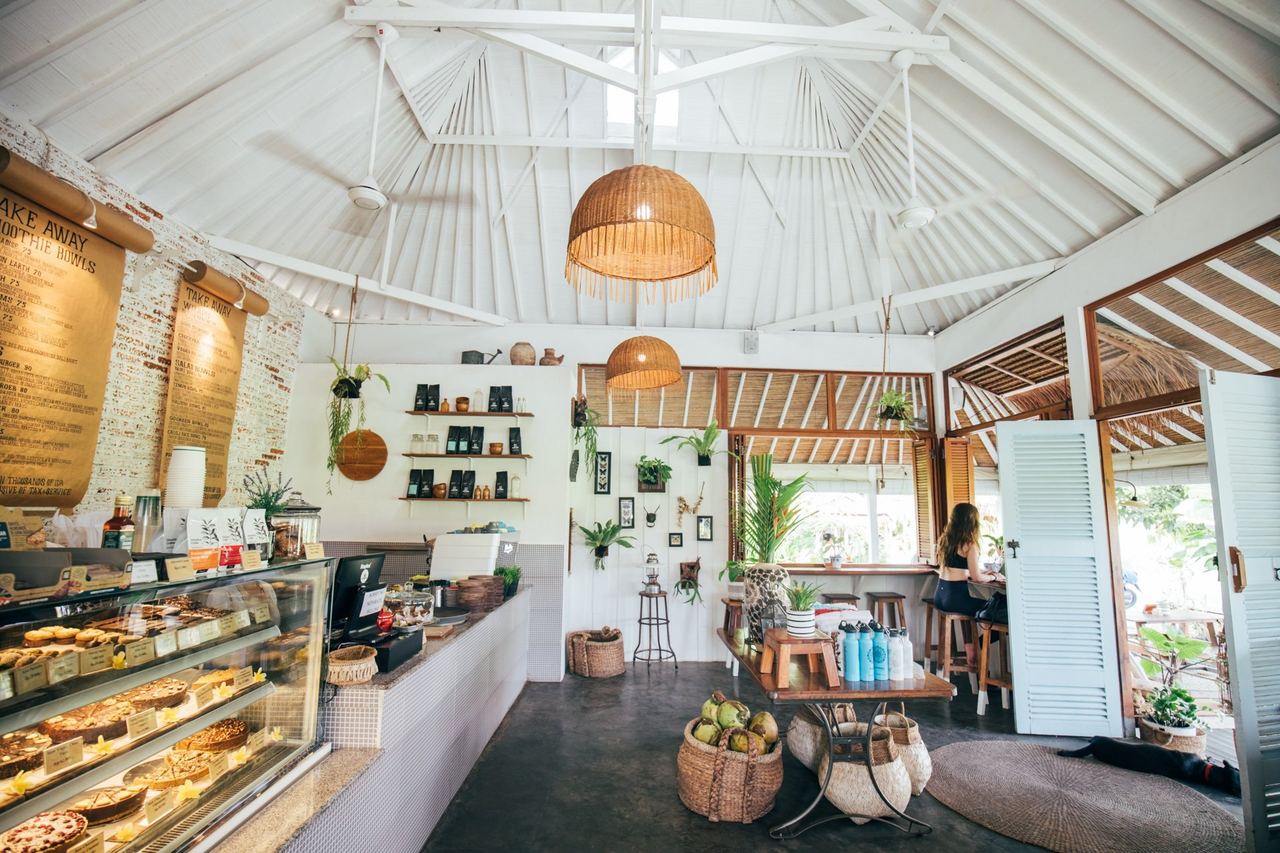
Photo Credit
Image courtesy of © The Shady ShackOur advice: taste Kintamani coffee black first, to find the citrus, then drink it any way you like. Go to the Seminyak roasters early, before the brunch crowd, book the Raffles afternoon tea ahead, and if you drive up to Batur, stop at a roadside coffee garden on the way down.
Why it's on our list
- Beans from the crater’s edge
- The roasters arrive
- Brunch, Canggu style
- Ubud and the plant-based table
Location
The map comes from Google Maps, which sets its own cookies once it loads.
More in depth
 The back storySundowners, arak and a day of silence: how Bali drinks, the back storyFrom palm-sap arak to cliff bars and beach clubs: how Bali learned to toast the sunset.
 The back storyWhere Bali sleeps: river valleys, clifftops and the beachGorges, cliffs, bays and design hotels: where to stay.
 The back storySanur, where Bali’s hotels began: the story of the Tandjung SariFour bungalows on a quiet beach in 1962, and how Sanur became the island’s first address.